
![How Much Does a Laundry Room Remodel Cost? [2026 Data]](https://file-host.link/website/concept32design-h7dios/assets/refined-images/1782818221214000_ab2d76c3c4c74c37823b6ffece92212f/360.webp)
Costs range widely. A cosmetic update with new appliances and paint might come in under $5,000. A full gut renovation with custom cabinetry, new plumbing, and high-end finishes can reach $42,000 or more. Where your project lands depends on room size, scope, appliances, and how much you're willing to touch the mechanical systems.
This guide breaks down 2026 cost ranges, the biggest cost drivers, a component-by-component budget breakdown, and practical advice for keeping your project on track.
Key Takeaways
- Typical laundry room remodels cost $6,000–$17,000, with an average around $11,000
- Minor cosmetic refreshes start around $1,500; full renovations can exceed $42,000
- Keeping existing plumbing and electrical layouts is the single highest-impact way to control costs
- Permits and demolition together can account for roughly 20% of total project cost, so build them into your budget from the start
- Appliances, cabinetry, and plumbing changes are consistently the biggest line items
How Much Does a Laundry Room Remodel Cost?
There's no single fixed price. According to Angi's 2026 cost data, most homeowners spend between $6,000 and $17,000, with an average of about $11,000. Simple cosmetic updates can start around $1,800, while luxury renovations push past $42,000.
What commonly derails budgets: underestimating permits and labor, choosing appliances before confirming plumbing compatibility, and being blindsided by demolition and disposal costs.
Typical Cost Ranges by Scope
| Remodel Tier | Cost Range | What's Included |
|---|---|---|
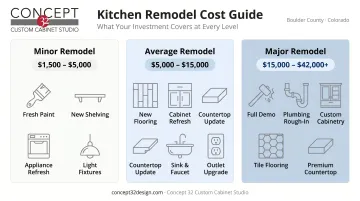
| Minor | $1,500–$5,000 | Paint, shelving, new appliances, updated lighting |
| Average | $5,000–$15,000 | New flooring, cabinets, countertop, utility sink, updated electrical |
| Major | $15,000–$42,000+ | Full demolition, layout changes, custom cabinetry, high-end finishes, plumbing/electrical rerouting |
Cost by Room Size
Room size directly affects material quantities — more square footage means more flooring, more cabinetry, and more wall surface to finish. Per HomeGuide's 2025 estimates, small laundry closets (10–30 sq ft) run $1,400–$7,500, while extra-large rooms over 80 sq ft can exceed $30,000. Most standard laundry rooms fall in the 35–60 sq ft range, with costs landing between $115 and $250 per square foot depending on finish level.
Minor Remodel ($1,500–$5,000)
Best for rooms that are functionally sound but need freshening. This tier typically covers:
- Fresh paint or wallpaper
- New washer and dryer
- Basic shelving or pegboard storage
- Updated lighting fixtures
Skipping plumbing and electrical work keeps this tier well within budget.
Average Remodel ($5,000–$15,000)
The most common choice for homeowners who want meaningful improvement without a full overhaul. Includes:
- New flooring
- Cabinet installation or refacing
- Countertop above the washer/dryer
- Utility sink addition
- Updated lighting and electrical outlets
Keeping the existing layout intact holds contractor costs down — the moment plumbing or electrical moves, you're looking at the next tier.
Major Remodel ($15,000–$42,000+)
Reserved for complete overhauls or converting an unfinished space into a laundry room. Typically includes:
- Full demolition
- Plumbing and electrical rerouting
- Custom cabinetry
- High-end flooring (tile, polished concrete)
- Premium countertops (quartz, marble)
- Possible structural expansion, skylights, or heated floors
Key Factors That Affect Laundry Room Remodel Costs
Five variables drive most of the cost variation in a laundry room remodel: room size, appliances, plumbing and electrical work, cabinetry, and permits. Knowing where each lands in your project prevents budget surprises mid-construction.
Room Size
Larger rooms require more material across every category: flooring, paint, cabinetry, and lighting. They also tend to accommodate premium appliances or stacked units that shift plumbing positioning. Cost doesn't scale linearly — a room twice the size won't necessarily cost twice as much — but material expenses climb steadily.
Appliances
Appliance costs vary dramatically by tier:
| Appliance Tier | Washer Cost | Dryer Cost |
|---|---|---|
| Basic | $350–$550 | $500–$600 |
| Mid-range | $500–$900 | $500–$900 |
| High-end / Smart | $900–$2,200+ | $900–$1,500+ |
ENERGY STAR certified washers use about 20% less energy and 30% less water than standard models, with full-size certified washers saving approximately $530–$550 over the product's lifetime. Heat-pump dryers use roughly 70% less energy than conventional electric dryers, worth factoring into the long-term budget.
Plumbing and Electrical Changes
Plumbing and electrical changes are where budgets spike unexpectedly. Key numbers:
- Moving washer/dryer hookups: $650–$2,500 (average $1,200) per Angi's 2026 data
- Electrician hourly rate: $50–$150/hr depending on project scope
- 240V outlet installation: $175–$300
Keeping hookups in place is the most effective single decision for controlling cost. If you're planning a second-floor laundry room, check with your local building department and insurer about drain pan requirements — requirements vary by municipality.
Cabinetry and Storage
The cost spectrum for storage is wide:
- Open shelving: Basic setups start under $500
- Prefabricated cabinets: $100–$300 per linear foot installed
- Custom cabinetry: $1,200 per linear foot or more for fully custom designs
Custom cabinetry built to a room's exact dimensions delivers better long-term functionality than stock options, particularly in compact or oddly shaped laundry spaces. For homeowners in Boulder County and the Northern Front Range, Concept 32 Custom Cabinet Studio manufactures cabinetry locally in Longmont with laundry-specific features including:
- Rollouts and dividers for cleaning supply storage
- Dovetail drawer construction
- Aventos vertical lifts for upper cabinets in tight spaces
- Motion lighting
- Slatwall for flexible wall organization
Permits, Labor, and Demolition
These line items are consistently underestimated:
- Permits: $400–$1,300 for most laundry room scopes; complex structural changes can push higher
- General contractor fee: Typically 15–20% of total project cost
- Demolition and disposal: $500–$1,500 for a full remodel
Together, permits and demo can represent up to 20% of total project budget. Budget for these before finalizing any other line items.
Laundry Room Remodel Cost Breakdown by Component
| Component | Typical Cost Range |
|---|---|
| Flooring (tile) | $12–$45/sq ft installed |
| Flooring (vinyl plank) | $2–$7/sq ft installed |
| Countertop | $40–$150/sq ft installed |
| Utility sink | $200–$1,500 installed |
| Recessed lighting | $100–$300 per fixture; $1,467–$1,800 for typical multi-light project |
| GFCI outlet | $120–$200 per outlet |
| 240V outlet | $175–$300 |
| Paint (full room) | $150–$300 |
| Permits | $400–$1,300 |
| Demolition and disposal | $500–$1,500 |
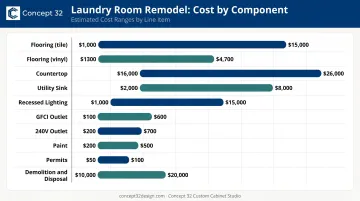
Flooring: Ceramic and porcelain tile are the strongest performers in moisture-prone environments. Per Angi's 2026 data, ceramic tile installation runs $12–$45/sq ft installed, with porcelain at $9–$50/sq ft. Vinyl plank costs less and still handles moisture well, making it a solid budget-friendly option.
Countertops: A countertop above front-load machines is a high-value addition for folding and sorting. Laminate sits at the lower end of the $40–$150/sq ft installed range; quartz and granite occupy the upper end.
Utility sink: Installing a utility sink runs $200–$1,000 not including new plumbing lines, or $600–$2,000 for a standalone laundry tub per Fixr data. For households that hand-wash or pre-treat regularly, it's one of the more useful functional additions at this price point.
Lighting and electrical: Recessed lighting runs $100–$300 per fixture, with a typical four-to-six fixture project landing around $1,467–$1,800 installed. GFCI outlets run $120–$200 each; a dedicated 240V outlet averages $175–$300.
Paint: Paint is the most cost-effective upgrade available: $150–$300 covers most standard laundry rooms. Use moisture-resistant paint. Wallpaper is an option too, ranging from $100 to $1,000+ depending on material.
Budget vs. High-End: What's the Real Difference?
Both tiers can deliver a functional laundry room. The gap shows up in durability, aesthetics, and long-term maintenance costs.
| Feature | Budget Remodel | High-End Remodel |
|---|---|---|
| Cabinetry | Prefab, stock sizes | Custom-designed, built to room dimensions |
| Appliances | Stock washers/dryers | Smart, energy-efficient units |
| Flooring | Vinyl plank or peel-and-stick | Tile or polished concrete |
| Countertop | Laminate or none | Quartz or granite |
| Lighting | Basic fixtures | Recessed, under-cabinet, designer |
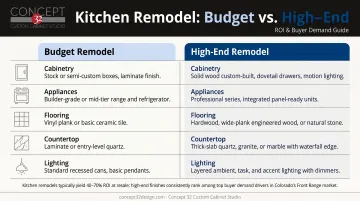
ROI estimates vary by source, and both figures sit below kitchen and bath returns — but laundry rooms still carry strong buyer appeal:
- Angi estimates 40–60% ROI; HomeGuide puts quality renovations closer to 60–70%
- 87% of homebuyers rate a laundry room as essential or desirable
- 63% prefer it on the first floor
That demand matters when sizing your budget. A poorly executed budget remodel often needs repairs or full replacement within 5–7 years. Quality materials and professional installation extend the room's lifespan and reduce ongoing costs — making the right investment level a function of how long you plan to stay and what comparable homes in your market look like.
Tips to Save Money on Your Laundry Room Remodel
Keep the Existing Plumbing and Electrical Layout
Moving a single water hookup can add $650–$2,500 to the project, making layout preservation the single biggest lever for budget control. Stacking washer/dryer units instead of side-by-side also frees up floor space without requiring layout changes.
Choose Materials Strategically
- Repaint cabinets rather than replacing them
- Use engineered alternatives to stone countertops
- Choose vinyl plank over tile for flooring
- Select mid-range appliances — the performance gap versus premium units is rarely worth the price jump
- Use prefabricated storage where function allows; save custom cabinetry for areas where dimensions or workflow make it worth it
Coordinate Trades Efficiently
- Schedule plumbers, electricians, and finish workers in sequence to avoid idle time and rework
- Handle low-risk prep work yourself — painting walls, swapping hardware, and demo in accessible areas
- Leave plumbing and electrical to licensed pros; failed inspections and code violations cost more to fix than the labor savings
Frequently Asked Questions
How much does a laundry room remodel cost?
Most homeowners spend between $6,000 and $17,000, with an average around $11,000 according to Angi's 2026 data. Minor refreshes start around $1,500; full renovations with layout changes, custom cabinetry, and premium finishes can reach $42,000 or more.
Can you remodel a laundry room for $5,000?
Yes — $5,000 is achievable for a minor remodel covering fresh paint, new appliances, basic shelving, and updated lighting. Once you add new flooring, cabinetry, or any layout changes, costs typically exceed that range.
How long should a laundry room remodel take?
Most standard remodels take 1–2 weeks. Full gut renovations involving plumbing and electrical work take longer, since trades work in sequence and rough-in inspections must pass before finish work can begin.
What are the most expensive parts of a laundry room remodel?
Appliances, cabinetry, and plumbing changes (especially relocating hookups) consistently top the cost list. Permits and contractor fees — often around 20% of total project cost — are frequently underestimated during initial planning.
Does a laundry room remodel increase home value?
ROI estimates range from 40% to 70% depending on quality of work and materials. Returns are lower than kitchen or bath renovations, but a modern, functional laundry room does boost buyer appeal, especially for families and first-time buyers.
Do I need a permit for a laundry room remodel?
Permits are typically required when plumbing or electrical systems are altered. Cosmetic-only work generally doesn't require one. A general contractor can handle permit filing and confirm the project meets local code.